Finding Art in Funny Places Feeds Creativity

Art pops up in some funny places. My wife, Tammy, likes a certain kind of kleenex because they are thicker and supposedly anti-viral, killing 99.9% of cold and flu viruses. What intrigues me about this type of kleenex is the box.

I love the art. It’s supposed to be pictures of little viruses. Whoever created the art thought “outside the box” (haha). The colorful little creatures brighten up a room and add some whimsy to a countertop. The boxes are bright, eye-catching, and fun.

If you keep your eyes open you can find art almost anywhere. Design, composition, and creativity can be seen on billboards, in grade school classrooms, and at offices. Some is excellent. Some is kitschy. Some is awful. But it can all be inspirational and add to your own creative process.

Opening your eyes to art in your daily life can spur on thoughts that lead you down a creative path. Even bad art can tell you where you don’t want to go with your current project.

Finding art in funny places is an excellent exercise for creatives of all ages. If you teach a class, ask them to look around the room and use something familiar as a starting p0int for an art project. If you write, use a catchy phrase from an ad as a starting point for your daily writing exercise. If you paint, imagine what a virus might look like.

Find art in funny places and feed your creativity.

Where have you seen funny art that inspired you?

How to Get Ahead with Preparation and Professionalism

Please understand. I am not recounting this incident as a way to brag. I learned a lesson from it, and I want to share that lesson with you.

Our son, Ben, was “managing” a girl who was auditioning for a showcase at Belmont University. Showcases are a big deal at Belmont. Only four acts make a Showcase. They are presented in the Curb Event center, which is the basketball arena at Belmont. Industry professionals are judges and Music Row professionals attend.

The girl that Ben managed happened to win the Showcase. The first thing the judges spoke about when they awarded the win was the winner’s “manager.” They said that of all the acts, this was the one manager who came in prepared. At the initial audition he carried a notebook and took notes. He politely introduced himself and then introduced his “client” to the judges. He carried himself professionally and took it seriously.

The industry judges were wondering if he was available to intern at their companies. The industry professional from Word Records made it clear that Ben was already interning there, and none of them could have him.

In the end, it was the talent and presentation of the act that won the showcase. But it obviously helped her to have better management than anyone else.

Think about your daily life, your work, or your organization:

  • Are you, and everyone else, paying attention? Ben demonstrated that he was paying attention when he carried his notebook and actually used it.
  • Are you prepared? When he walked into the room, Ben knew ahead of time what he was going to do. He was going to make sure everyone knew who he was, and who his client was.
  • Are you acting in a professional manner? Do your dress and your posture exude confidence? Do your manners and mannerism show respect?
  • Are you putting the needs of others before your own? For the good of his “client,” everything Ben did in front of the judges, and behind the scenes at the show, was not for himself but for the good of the team.

Ben’s experience taught me that preparation and professionalism create opportunities for individuals and for teams. People notice those who distinguish themselves. They recognize excellence. They want to associate themselves with people who stand out.

What suggestions do you have for making a mark and distinguishing yourself or your organization?

Embracing Change (Even Facebook Change)

Maybe it’s just my personality, but I enjoy change.

Even Facebook change.

This is probably the fourth iteration of Facebook that I have passed through since I first joined the social media giant. Every single time there has been an explosion of protest. Every single time it takes about two weeks for people settle in, learn the changes, and completely forget what they were complaining about.

The thing that really surprises me about the current outcry is the people who are crying the loudest. It seems to me that the most vocal complainers are the ones typically associated with pushing for change in other areas of life: young people; those in their late teens to late twenties.

It just goes to show that change is difficult for most everyone. If you take someone out of his comfort zone, if you mess with her status quo, if you make an alteration in what he expects, well…then you can expect to hear about it. You may even lose a fan, customer, or church member.

Change must be crafted carefully and gently by those making the change. But I believe that those on the receiving end of change have the opportunity to respond and react in ways other than crying, whining, or complaining about it.

When my new Facebook screen popped up, I embraced the change and took five steps. These five steps can help in the face of any kind of change:

  1. Accept it as a challenge. I saw the new lists, groups, and sidebars, and started exploring. I did a bit of research on the internet. I wasn’t going to let Facebook defeat me. I was going to accept the challenge, overcome the obstacles, and conquer that which I feared.
  2. Learn from it. The new Facebook provided me the opportunity to learn and discover things that could help me navigate my way around the change. It helped broaden my perspective and open my mind to new possibilities and ideas with this wonderful tool for communication.
  3. Discover the benefits. I learned that with the new Facebook there is an emphasis on pictures (which I really like; who doesn’t enjoy looking at pictures?), a new way to group people so that I can more closely follow certain groups of friends, family, or acquaintances, and an up-to-the-moment “ticker” of what my friends, family, and acquaintances are doing. It’s cool stuff that adds a whole new facet to this tool.
  4. Help others. When there is change there is always someone who will need help getting along with that change. One of the first things I did was share a link on my “wall” that provided information about some of the new Facebook features. People appreciated it. One person even commented that she wished Facebook itself would have provided such a learning tool.
  5. Be prepared for more change. On the heels of rolling out the new Facebook format, its founder (Mark Zuckerberg) announced that there will be another new feature rolled out shortly. It’s called the “timeline.” It’s a complete revamp of the profile page, and will allow people the opportunity to create a personal online history with words, pictures, and videos. The possibilities are incredible. But, of course, people are already complaining about this coming change.

Following these five steps presents a whole new, positive way to receive and embrace change. The next time you face major change in your life, I dare you to try it.

What’s your best tool for dealing with change?

How to Be an Everyday Hero

Why is it that true heroes never think they are heroes? This past week I have seen two examples. One was a war hero who entered into the midst of a firefight to try and rescue comrades who were being ambushed. He survived. They did not. He received a Medal of Honor, but refuses to call himself a hero. Had he been a hero, he surmises, they all would have survived.

The second example includes a small group of people who lifted a car off of a motorcycle driver who had been hit by a car. They dragged him out from under the car, and he survived. They all say they are not heroes. They simply did what anyone else would do. But they are heroes to the one whose life has been saved.

True heroes are ordinary people who encounter an extraordinary situation and respond. But, in their mind, it isn’t out of the ordinary. To them, it’s what most anyone would do given a similar situation.

Every day we face situations that have the potential to be extraordinary:

  • A decision to do this and not that
  • A word of advice that changes a friend’s direction
  • A happenstance action that changes the path of two lives
  • An unexpected apology
  • A token of encouragement to one who needs it most

When you go to bed tonight, will there be someone you encountered today who will call you a hero? You simply did what anyone would do in a similar situation. But no one else did. You would never call yourself a hero. But the one impacted will.

As you make your way through the day be:

  • An Encourager
  • A Cheerleader
  • A Motivator
  • A Listener
  • A Giver
  • A Mover
  • A Shaker

You never know when an ordinary day will make you a hero of epic proportions. You may even literally save a life.

Who is your hero? Why?

Finding a Niche Which Contributes a Unique You

Did you know there is a man whose only job is to keep track of injuries in professional sports? His name is Will Carroll. I heard him on the radio discussing specific baseball and football injuries, and the impact those injuries would have both on individual players and on their teams.

At a time when millions of dollars are riding on each and every game, injuries have a big impact. Someone needs to keep track of them for fantasy sports players, those who wage their hard earned money on games, and even casual fans. Will Carroll has carved that niche. He has made a career involving the things he loves: writing, talking, and sports.

Seth Godin says that’s the way to become a linchpin. Be indispensable. Discover your passion. Do what nobody else is doing (or not doing very well).

Examine your life right now:

  • How can you contribute in a unique and distinct way in your workplace?
  • What passion can you pursue outside of the workplace that will find its own niche?
  • What gap can you fill at work, at home, or amongst your friends?
  • What is it that makes you indispensable?

Don’t let your passion die. Find a way to live it out. Write down your dreams and goals. Make a way for your gifts, talents, and knowledge to provide a unique contribution.

You can do it. I know you can. I’d love to see what my readers discover, create, or start.

What would you do if you knew you could not fail?

9/11: Yesterday, Today, and Forever

The week of September 11th, 2001, time stood still. It seemed as though Yesterday, Today, and Forever stood shoulder to shoulder, staring into the blackness of the New York sky, mourning over a ditch in western Pennsylvania, and saluting the charred side of the Pentagon.
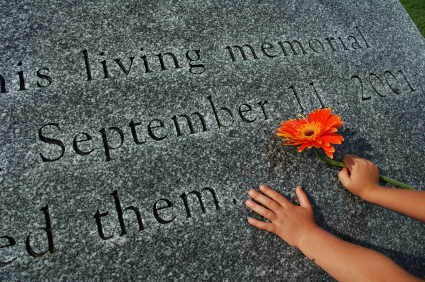
Businesses shut down, schools closed, our nation was transfixed for hours and days with our TV’s and radios. Yesterday, Today, and Forever would never be the same.

Candice Trigonis, a police detective from New York, said: “I worked 19 hours yesterday. I’ve been here since 5 o’clock this morning. I’m tired. I’m angry. Upset. I’m afraid to cry because if I start, I’ll never stop.”

Just as the nation was beginning to realize the breadth and depth of that horrific event, President Bush said: “Today we’ve had a national tragedy.”

And already thinking about “forever,” Congressman Mark Green said: “Nothing will be the same in this country after today. Nothing.”

Yesterday, Today, and Forever collided on Tuesday, September 11th, 2001, and caused one big, fiery ball that radiated fear into the hearts of Americans. Another “day that would live in infamy.”

“Never will I leave you; never will I forsake you.” So we say with confidence, “The Lord is my helper; I will not be afraid. What can man do to me?” Remember your leaders, who spoke the word of God to you. Consider the outcome of their way of life and imitate their faith. Jesus Christ is the same yesterday and today and forever. ~Hebrews 13:5b-8

Even if we lose everything we own: “goods, fame, child, and wife,” we still have the presence of a Father who loves and forgives. Earthly economic and military power is frail and fragile. Human life is frail and fragile. But “God is our refuge and strength, an ever-present help in trouble. Therefore we will not fear, though the earth give way and the mountains fall into the heart of the sea…The Lord Almighty is with us; the God of Jacob is our fortress” (Psalm 46:1-2,7)…yesterday, today, and forever.

When we ask, “Why?” God shows us the cross. It was there that evil was used for good. No worse terror could there be than the Son of God suffering hell. No worse enemy could there be than the devil himself. No more awful experience could there be than God’s Son being crushed under the weight of the world’s sin. But through His divine bravery and courage He willingly faced it all so out of the depths would arise new life, new victory, new hope, and new hope…for yesterday, today, and forever…for you.

“Jesus Christ is the same yesterday and today and forever.” Our nation, our world, our lives may never be the same again. But Jesus is always the same. Through all the changes and chances of life Christ is, above all, unchanging in His faithfulness. He offered Himself for sinners in the past, He intercedes for us in the present, and will forever remain our faithful Savior.

“On Christ, the solid rock, I stand; All other ground is sinking sand.” …Yesterday, Today, and Forever.

How have the events of 9/11 impacted your faith?

Write What You Know (And You Know A Lot)

There is an old adage that says, “Write what you know.” It means that your best writing will be about the things that you know best. If you are a teacher write about teaching. If you are a son write about being a son. If you are a camper write about camping.

This applies to most any art, vocation, or creative endeavor. What do you know? How can you use what you already know to create something new?

The world is waiting to learn from you. You know something I don’t know, and you can say it, create it, paint it, or write it in a way that is uniquely yours.

If you’re a

  • teacher: show us your most creative teaching method.
  • pastor: tell us how you prepare for your sermons.
  • writer: let us read about when and where you write.
  • actor: teach us how to engage people in a story.
  • musician: share the way you craft a song.
  • visual artist: relate your thoughts about conquering a blank canvas.

You know a great deal about your craft, your life, your creativity. There are people eager, ready, and waiting to learn from you.

Write/tell/teach/share/show what you know. 

We’re waiting.

20 Surprising Things You Probably Never Knew About Me

One of the keys to being a blogger is a certain degree of transparency. I want to build relationships with you, my readers. I want you to know me better. And I want to know you, too.

Toward that end, I want to tell you twenty things that you may have never known about me. But you have to promise: no laughing; no making fun; no mockery. OK? OK.

  1. I once had permed hair, down to my shoulders.
  2. I was the lead singer of a Christian, heavy metal band called Messenger.
  3. I shook President George H.W. Bush’s hand.
  4. I played Jesus in Godspell, Joseph in Joseph and the Amazing Technicolor Dreamcoat, and Captain Von Trapp in The Sound of Music.
  5. I was a starting half back on my high school football team.
  6. I swam the butterfly on my high school swim team.
  7. I met my wife, Tammy, in a Christian band called Joy, Inc. We traveled the entire country for nine months.
  8. While in Joy, Inc. I sang in a maximum security prison in Texas.
  9. When I was a boy scout I got a badge for doing a mile swim in a lake.
  10. Along with my daughter, I stood on a Broadway stage.
  11. I held Bono’s hand, supporting him on the edge of the stage as he sang during a U2 concert.
  12. I coached baseball for twelve years.
  13. I flew to Israel on Y2K (remember that?)
  14. My first car was a Chevy Vega.
  15. The first band I saw live in concert was ELO.
  16. My first job was as a caddy. I later became a bus boy at the same country club.
  17. The first album I ever bought was Queen’s A Night at the Opera.
  18. Mice scare me to death.
  19. I have lived in Wisconsin, Missouri, North Carolina, and Virginia.
  20. I once went surfing in the Pacific Ocean.

Now that you know more about me, I’d like to know more about you. It’s your turn.

Tell me one surprising thing about yourself.

10 Ways to Say Thank You to Your Favorite Teacher

It’s not just students going back to school. Teachers are going back to school now, too. Say what you want about the nice summer vacation teachers get, when school’s in session teachers work long and hard hours.

The school year is a day in and day out march leading students toward reading, writing, and ‘rithmetic, proficiency. It’s a hard, and often thankless, job. Teachers go hard from the end of August all the way through the beginning of June.

For a teacher, a little expression of thanks goes a long way. Here are ten ways to say thank you to your (or your child’s) favorite teacher:

  1. Have a bouquet of flowers delivered.
  2. Send a gift card with your child to the teacher’s favorite restaurant or store.
  3. Write a simple note of thanks, being specific as to your favorite things about the teacher.
  4. Arrange to sit with the teacher’s class during lunch time, so that the teacher can have a small break from the students.
  5. Volunteer to carry out small tasks such as grading papers, putting up a bulletin board, or cutting out construction paper letters.
  6. Be a recess monitor for a week.
  7. Deliver a cup of your teacher’s favorite coffee drink just before school starts for the day.
  8. Take the teacher out to dinner on a Friday evening (Hint: Teacher’s love Friday evenings).
  9. Tell the principal all of the things you love about the teacher and how much you appreciate him or her.
  10. Arrange an all-expenses paid trip to a tropical location right smack in the middle of February.

OK, that last one may not be very feasible. But you get the idea.

What ideas do you have for showing appreciation to your favorite teacher?

Life Is There, and I Have to Live

Two women. One story. Two continents. One tragedy.  Two broken hearts. One hope.

Andrea Garbarini lost her husband, a firefighter, in the 9/11 attacks. She coped by creating a documentary called “From the Ground Up.” She also visited and interviewed widows in Rwanda, whose husbands had been murdered in the nation’s genocide. She wanted to see how they made it through the most horrific tragedy anyone could ever imagine.

In her interviews, Andrea says the women helped her more than she could have ever helped them. She wanted to know how the women could see any light at all. She thought it might help her cope with her own tragic loss.

One Rwandan woman said, “I realized life is there, and I have to live.”

Life is there, and I have to live. She could have given up, ended it all, simply stopped living.

But she chose to move on, overcome, live. Death and Death’s allies thought they had scored victory. They were all sadly mistaken. The fortitude of one brave woman spoke hope.

Life is in front of her and she can do nothing but live it. Andrea Garbarini said that the Rwandan women helped her more than she could have ever helped them.

Don’t let tragedy strike before you say, “Life is there, and I have to live it.” God’s gift of life is not to be taken for granted. It is there. It is to be lived. It is to be loved. Even in the midst of tragedy it is filled with hope.

Jesus said, “I have come that they may have life, and have it to the full” (John 10:10).

How are you living life to the full today?